Executive Summary
Fast Retailing Co., Ltd., traded in the U.S. OTC market under the ticker FRCOY, released its latest earnings results on January 7, confirming that the world’s third-largest apparel retailer continues to defy many of the structural challenges facing the global consumer discretionary sector. The latest Fast Retailing Earnings report delivered a clear message to investors: despite inflationary pressures, geopolitical uncertainty, and uneven consumer demand across regions, the company is successfully executing a long-term strategy centered on global scale, operational discipline, and product-driven demand.
The market’s response to the FRCOY Financial Report was swift. The FRCOY stock price reflected renewed investor confidence as management raised full-year operating profit guidance following a strong first-quarter performance. While valuation multiples remain elevated compared with some peers, the company’s earnings visibility, balance sheet strength, and international growth trajectory continue to justify a premium in the eyes of long-term investors.
This report offers a comprehensive and data-driven analysis of Fast Retailing’s latest financial performance, with particular emphasis on income statement dynamics, margin evolution, regional and segment performance, capital allocation, and strategic initiatives. It also examines how changes in financial metrics may influence future business development, revenue growth, and profitability. Finally, the report concludes with a forward-looking assessment of the Fast Retailing stock and a clear investment recommendation.
Company Background and Business Model
Fast Retailing Co., Ltd. is a Japan-based global apparel retailer best known as the owner and operator of UNIQLO, a brand that has become synonymous with functional, high-quality everyday clothing. Founded in 1949 and headquartered in Yamaguchi, Japan, Fast Retailing has grown from a domestic menswear retailer into a multinational enterprise with thousands of stores across Asia, Europe, North America, and Oceania.
At the core of Fast Retailing’s success lies its SPA (Specialty Store Retailer of Private Label Apparel) business model. Unlike traditional apparel companies that rely heavily on third-party manufacturers and wholesalers, Fast Retailing controls nearly every step of the value chain, including product planning, material sourcing, manufacturing oversight, logistics, marketing, and retail operations. This vertically integrated structure enables tighter cost control, faster response to demand trends, and more consistent product quality.
UNIQLO accounts for the majority of group revenue and profits, both in Japan and internationally. Additional brands such as GU, Theory, PLST, and other global labels play supporting roles, contributing to diversification but also presenting restructuring challenges in certain mature markets. Over time, management has increasingly focused resources on UNIQLO as the primary engine of long-term growth.
Macro Environment and Industry Context
The global apparel industry remains highly competitive and cyclical. In recent years, retailers have faced rising input costs, supply chain disruptions, fluctuating currency exchange rates, and shifting consumer preferences. Inflation has pressured discretionary spending in developed markets, while emerging markets offer growth opportunities but also introduce geopolitical and regulatory risks.
Against this backdrop, Fast Retailing has positioned itself not as a traditional fast-fashion brand chasing short-term trends, but as a provider of “LifeWear” — clothing designed to be functional, durable, and seasonally adaptable. This positioning has proven resilient during periods of economic uncertainty, as consumers prioritize value, quality, and practicality over rapid trend turnover.
The January earnings release must therefore be interpreted not in isolation, but within this broader macroeconomic and industry context. The company’s ability to grow profits at a double-digit rate in such an environment underscores the effectiveness of its strategic positioning.
Overview of the January Financial Report
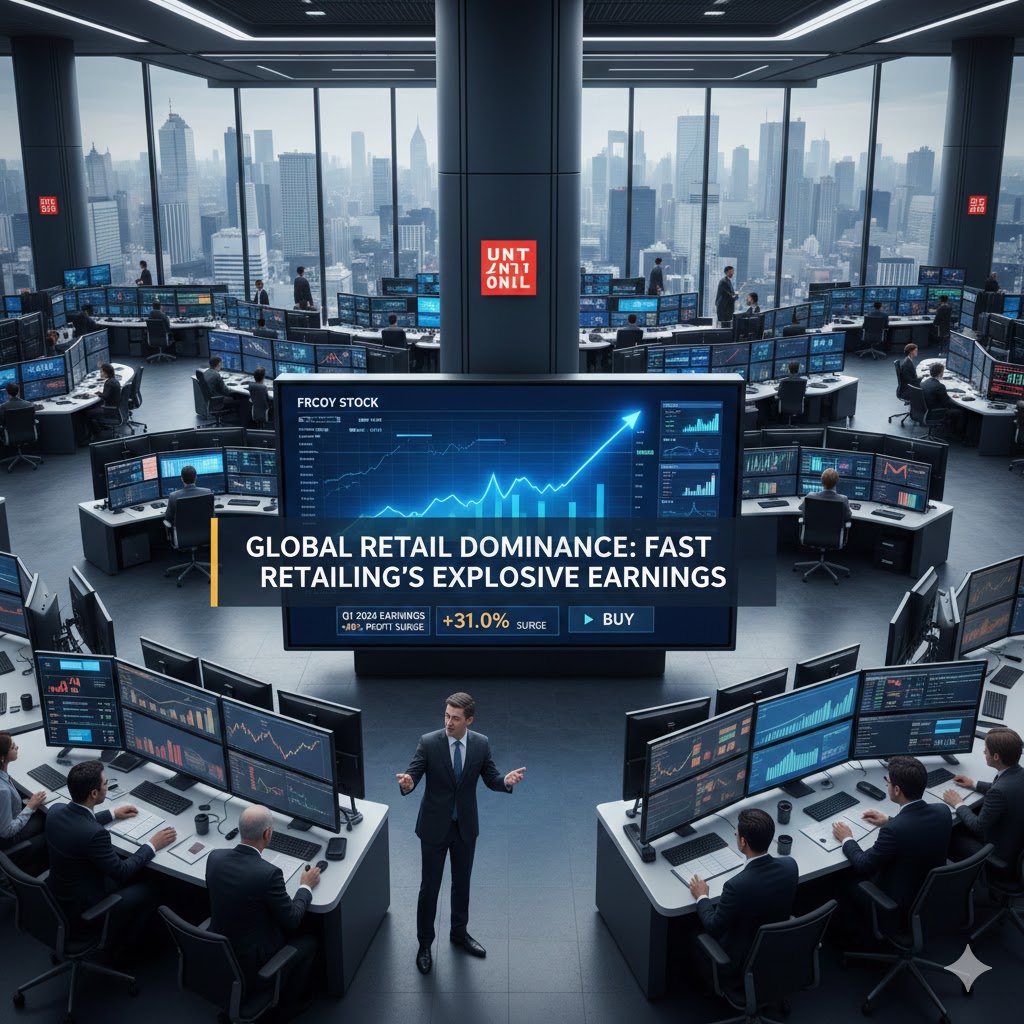
The FRCOY Financial Report released on January 7 covered the first quarter of the fiscal year, a period that is seasonally important due to winter product sales in major markets. The headline figures were notably strong:
Revenue grew at a healthy double-digit pace year over year, driven primarily by international operations. Operating profit increased by more than 30%, significantly outperforming market expectations. Net income followed a similar trajectory, reflecting both higher operating leverage and disciplined cost management.
Perhaps most importantly, management raised its full-year operating profit forecast, signaling confidence that the strong start to the fiscal year is not a one-off event but part of a sustained earnings trend. This guidance revision played a key role in shaping investor sentiment toward the FRCOY stock.
Detailed Income Statement Analysis
A closer examination of the income statement reveals several important trends that help explain the strong headline results.
Revenue Growth and Composition
Total revenue increased meaningfully compared with the same period in the previous year. This growth was not evenly distributed across all segments, but was instead driven by a combination of strong domestic demand in Japan and accelerating international expansion.
UNIQLO International emerged as the single largest contributor to incremental revenue growth. Sales in Greater China, Southeast Asia, and other Asian markets continued to benefit from store expansion, improved brand recognition, and localized product assortments. Meanwhile, North America and Europe showed steady progress, albeit from a smaller base.
In Japan, revenue growth was supported by strong same-store sales, particularly in core winter categories. Seasonal products aligned well with consumer demand, demonstrating the effectiveness of Fast Retailing’s demand forecasting and inventory planning.
Gross Profit and Margin Trends
Gross profit rose broadly in line with revenue, resulting in a relatively stable gross margin. This stability is noteworthy given the ongoing challenges related to raw material costs, labor expenses, and currency fluctuations.
The company’s ability to maintain margins reflects several structural advantages. First, its scale allows it to negotiate favorable terms with suppliers. Second, its vertical integration reduces dependency on intermediaries. Third, disciplined markdown management helps protect pricing integrity.
While some margin pressure was observed in certain markets due to promotional activity and cost inflation, these effects were largely offset by higher sales volumes and improved product mix.
Operating Expenses and Operating Margin
Operating expenses grew at a slower pace than revenue, resulting in meaningful operating margin expansion. Selling, general, and administrative expenses benefited from scale efficiencies, particularly in international markets where fixed costs were spread across a growing revenue base.
Digital investments and store expansion continued, but these expenditures were carefully managed to ensure they contributed to long-term growth rather than short-term cost inflation. As a result, operating profit increased at a faster rate than revenue, highlighting the company’s strong operating leverage.
Net Income and Earnings Quality
Net income growth exceeded operating profit growth, reflecting not only improved operating performance but also favorable financial and tax dynamics. Importantly, the quality of earnings appears high, with profits driven primarily by core business operations rather than one-off items.
This earnings quality strengthens the investment case for the Fast Retailing stock, as it suggests that current profitability levels are sustainable rather than artificially inflated.
Segment Performance Analysis
UNIQLO Japan
The Japanese market remains the foundation of Fast Retailing’s business, both financially and strategically. In the latest quarter, UNIQLO Japan delivered solid revenue and profit growth, supported by strong consumer demand for seasonal products.
Same-store sales increased at a healthy pace, reflecting effective merchandising and pricing strategies. While Japan is a mature market with limited long-term growth potential, its stability provides a reliable cash flow base to fund international expansion.
UNIQLO International
UNIQLO International continues to be the most important growth engine for Fast Retailing. Revenue growth in this segment significantly outpaced the group average, driven by both new store openings and strong performance at existing locations.
China remains a critical market, despite periodic volatility related to macroeconomic conditions and local competition. Southeast Asia, India, and other emerging markets offer additional growth opportunities, supported by rising disposable incomes and increasing brand awareness.
North America and Europe are still in relatively early stages of development for UNIQLO, but progress in these regions suggests long-term potential. Flagship stores in major cities serve not only as revenue generators but also as brand showcases, supporting broader market penetration.
GU and Other Brands
The GU brand delivered modest revenue growth and improved profitability, benefiting from better inventory control and cost management. However, its contribution to overall group profits remains secondary compared with UNIQLO.
Other global brands experienced mixed performance, with some markets undergoing restructuring. Management has been transparent about its willingness to rationalize underperforming assets, a discipline that supports overall profitability even if it limits short-term revenue growth.
Balance Sheet Strength and Capital Allocation
Fast Retailing’s balance sheet remains one of its greatest strengths. The company maintains a substantial cash position, providing flexibility to invest in growth initiatives, weather economic downturns, and return capital to shareholders.
Total debt levels are manageable, and net cash remains positive. This conservative financial structure reduces risk and enhances resilience, particularly important in a volatile global retail environment.
Inventory levels increased modestly, reflecting preparations for future sales rather than excess stock. Inventory turnover remains healthy, suggesting that working capital is being managed efficiently.
Capital expenditure continues to focus on strategic priorities, including store expansion, digital infrastructure, and supply chain optimization. These investments are designed to support long-term revenue growth rather than short-term earnings manipulation.
Cash Flow Analysis
Operating cash flow remained strong, supported by healthy profitability and disciplined working capital management. Free cash flow declined compared with the previous year, primarily due to increased investment activity rather than deteriorating operating performance.
From a long-term perspective, this pattern is not concerning. On the contrary, it indicates that management is reinvesting cash flows into growth opportunities that are expected to generate future returns.
Dividend payments increased, reflecting management’s confidence in the company’s cash generation ability. This shareholder-friendly approach enhances the appeal of the FRCOY stock for income-oriented investors as well as growth investors.
Strategic Initiatives and Long-Term Growth Drivers
Fast Retailing’s strategy is built around several key pillars that are expected to drive future revenue and earnings growth.
Product innovation remains central, with ongoing investment in functional materials and design. By focusing on timeless, practical clothing rather than fast-changing trends, the company aims to build lasting customer relationships and reduce fashion risk.
Global expansion continues, particularly in regions with favorable demographic and economic trends. The company’s measured approach — combining flagship stores, localized assortments, and digital channels — reduces execution risk while maximizing long-term potential.
Digital transformation is another critical focus. Omnichannel integration, data-driven merchandising, and improved customer engagement tools are expected to enhance both revenue growth and operational efficiency over time.
Risks and Uncertainties
Despite its strengths, Fast Retailing is not immune to risks. Macroeconomic downturns could reduce consumer spending, particularly in discretionary categories. Currency fluctuations may impact reported earnings, given the company’s global footprint.
Geopolitical tensions, especially in key markets such as China, could disrupt operations or consumer sentiment. Competition remains intense, with both global and local brands vying for market share.
Valuation risk is also a consideration. The FRCOY stock price reflects optimistic expectations for future growth, leaving limited margin for error if earnings momentum slows.
Valuation and Stock Price Outlook
At current levels, the FRCOY stock price implies a premium valuation relative to many peers in the global apparel sector. This premium reflects the company’s superior growth profile, margin structure, and balance sheet strength.
From a long-term perspective, continued earnings growth, disciplined capital allocation, and successful international expansion could justify this valuation. However, short-term volatility should be expected, particularly in response to macroeconomic developments.
Investors should view the Fast Retailing stock as a long-term compounder rather than a short-term trading vehicle. Patience and a focus on fundamentals are essential.
Investment Recommendation
Based on the analysis of the January Fast Retailing Earnings, financial performance, strategic positioning, and valuation considerations, the investment outlook for Fast Retailing remains positive.
For long-term investors with a tolerance for cyclical volatility, the FRCOY stock represents an attractive opportunity to gain exposure to a high-quality global consumer brand with strong earnings visibility and a robust balance sheet.
Recommendation: Long-Term Buy
Conclusion
The January earnings release reaffirmed Fast Retailing’s position as one of the strongest operators in the global apparel industry. The FRCOY Financial Report demonstrated that the company is not only growing revenue but also expanding margins, generating cash, and investing strategically for the future.
While risks remain, the balance of evidence suggests that Fast Retailing is well positioned to continue delivering value to shareholders over the long term. For investors seeking exposure to a resilient, globally diversified consumer business, the Fast Retailing stock deserves serious consideration.