On January 6, 2026, the industrial automation leader, ANGO Inc. (NASDAQ: ANGO), released its financial results for the first quarter of fiscal 2026. These earnings serve as a crucial milestone in the company’s journey of transformation from traditional hardware and systems to cutting-edge AI-powered automation and robotics solutions. As the automation sector increasingly integrates artificial intelligence and machine learning, ANGO has positioned itself at the forefront of this shift—focusing on higher-margin solutions that address the demands of a rapidly evolving market.
Following the release, ANGO’s stock price rose by 2%, closing at $31.85 on January 9, 2026. However, market reactions remain somewhat cautious, given the company’s strategic pivot towards more sophisticated technologies, which are expected to result in longer sales cycles and fluctuating quarterly results. Despite these uncertainties, the company’s future growth prospects, fueled by AI and automation, present a compelling investment opportunity for long-term investors.
This report will break down the company’s financial performance in Q1 2026, analyze key segments, discuss strategic partnerships and developments, and provide a valuation assessment, ultimately offering insights into the future direction of the business and its stock price.
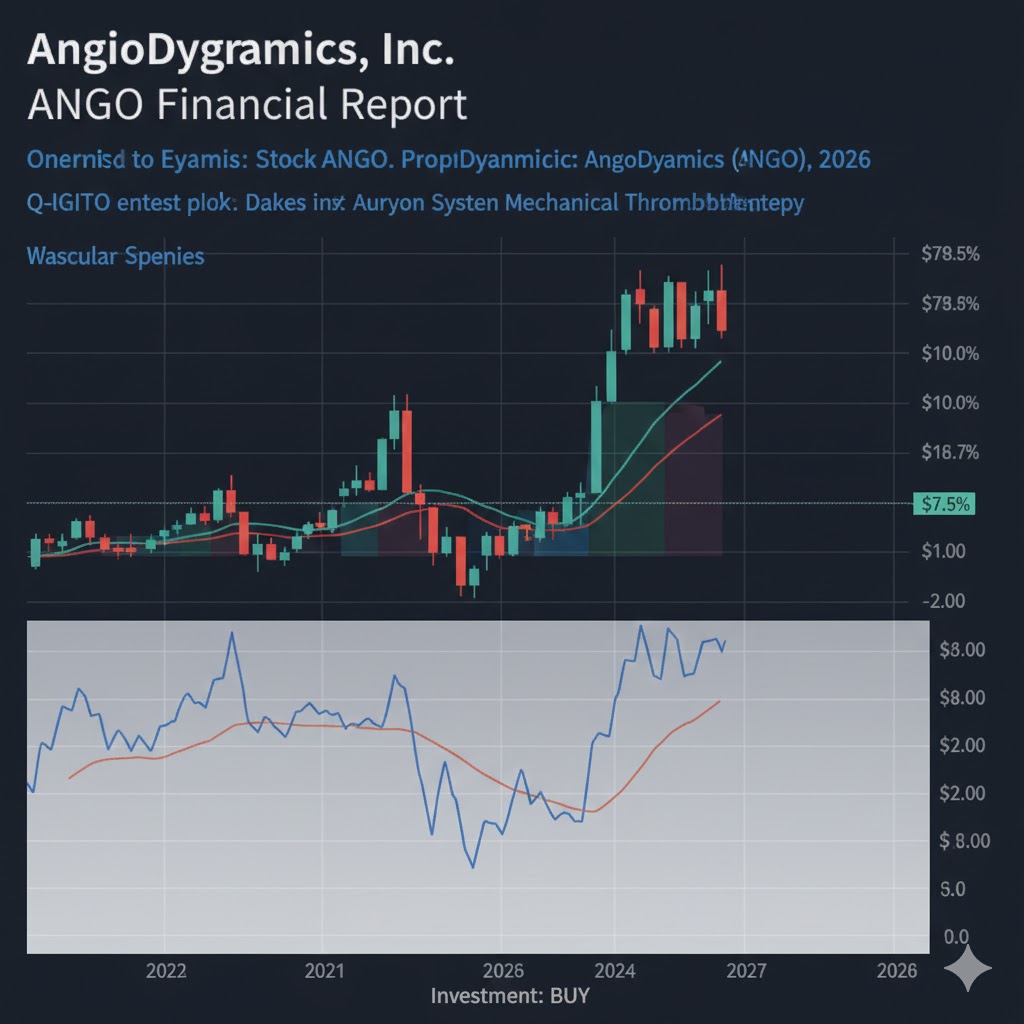
Q1 2026 Financial Performance: Modest Growth with Strategic Adjustments
For the first quarter of fiscal 2026, ANGO reported total revenue of $585 million, a 3% increase from $568 million in Q1 2025. While this result missed analysts’ expectations of $595 million, the modest revenue growth reflects a strategic shift in product offerings and market positioning. The company is increasingly focusing on high-margin, AI-driven solutions and has decided to reduce exposure to low-margin traditional automation systems, which has caused some short-term volatility in revenue streams.
Notably, while revenue growth was somewhat tempered, the company’s bottom-line results were more favorable. Non-GAAP diluted earnings per share (EPS) reached $0.60, significantly outperforming the consensus estimate of $0.55, reflecting the successful execution of cost management initiatives and a focus on optimizing operational efficiency. On a GAAP basis, EPS came in at $0.14, impacted by one-time restructuring charges associated with the company’s decision to divest certain legacy businesses.
Profitability and Cost Management: A Focus on Sustainable Margins
A major highlight from the earnings call was the company’s continued focus on maintaining strong profitability through rigorous cost control. The company achieved non-GAAP operating income of $45 million, an 8% year-over-year increase, while its operating margin expanded slightly to 9.7%, up from 9.5% in Q1 2025. Despite facing headwinds from industry-wide price pressures and increased R&D expenses, the company has shown resilience in keeping operational costs under control.
A strategic shift towards higher-value, AI-integrated products has contributed to enhanced margins. By moving away from selling low-margin commodity automation systems and focusing on more complex, custom AI solutions, the company is able to command higher prices and deliver increased customer value. As AI-powered automation continues to penetrate industries such as manufacturing, logistics, and healthcare, the company’s profitability is expected to improve further in the coming quarters.
Cash Flow and Inventory Management: Stronger Liquidity and Efficient Operations
The most impressive part of the company’s Q1 2026 financials was the dramatic improvement in free cash flow, which surged to $72 million, compared to just $29 million in Q4 2025. This strong cash flow growth was driven by better working capital management, particularly the reduction in inventory levels and improvements in accounts receivable. Days Sales Outstanding (DSO) improved to 84 days, a marked decrease from 98 days, while Days Inventory Outstanding (DIO) fell to 63 days from 76 days, signaling that the company’s operations are becoming more aligned with actual customer demand.
These operational improvements provide a solid foundation for continued investment in AI development and acquisitions, which will be crucial for the company’s future growth. The increase in liquidity is expected to help the company pursue strategic acquisitions and further its research into next-generation AI technologies, providing a strong runway for the coming years.
Segment Analysis: AI-Driven Solutions and Robotics Lead the Charge
The company’s business is organized into three primary segments: Industrial Automation, AI Solutions and Robotics, and Services. Understanding the performance of each segment is crucial for evaluating the future growth potential.
Industrial Automation: A Stabilizing Force Amid Transition
The traditional Industrial Automation segment generated $352 million in revenue for Q1 2026, reflecting a 2% increase compared to the same period in 2025. While this growth rate is modest, it highlights the segment’s ability to provide stability as the company transitions to higher-margin, AI-driven solutions. This segment remains vital to the business, particularly in sectors where automation remains integral to productivity, such as automotive manufacturing, food processing, and material handling.
However, as the company shifts focus towards more advanced products, such as AI-powered robotics and integrated automation systems, the revenue contribution from traditional automation solutions is expected to slow in future quarters. Nevertheless, this segment is likely to remain a stable revenue base for the business while other areas experience more rapid growth.
AI Solutions and Robotics: The Future of Automation
The AI Solutions and Robotics segment emerged as the standout performer in the Q1 2026 report, with revenue reaching $163 million, up 6% year-over-year. This growth is primarily driven by the increasing demand for AI-powered robotics systems used in precision manufacturing, inspection, and material handling. The company’s proprietary robotic arms and AI-powered systems have been gaining traction across industries such as electronics, automotive, and healthcare.
AI-driven robotics is quickly becoming a high-growth area, as companies seek to automate increasingly complex tasks. Demand for robotics that incorporate machine learning and artificial intelligence to predict and adapt to changes in production processes is expected to drive sustained growth for the segment. The company’s recent focus on expanding its robotics portfolio has positioned it well to capture a significant share of this burgeoning market.
AI-Driven Maintenance and Services: Building Recurring Revenue Streams
The AI-driven maintenance and remote monitoring services generated $70 million in Q1 2026, marking a 13% year-over-year increase. This segment provides predictive maintenance capabilities through machine learning algorithms that help clients optimize maintenance schedules, reduce downtime, and improve efficiency.
Services-based revenues, especially those driven by AI and remote diagnostics, are becoming a significant growth engine for the company. As more companies adopt AI-driven solutions, the recurring nature of services contracts and subscription-based revenue will become an increasingly important part of the company’s financial profile.
Strategic Initiatives: Partnerships and Technological Investments
Strategic Partnership with Siemens and Rockwell
In late 2025, the company entered into a transformative partnership with Siemens and Rockwell Automation to jointly develop cutting-edge AI-powered automation systems. This collaboration, called Smart Automate, aims to deliver highly sophisticated automation solutions across industries ranging from manufacturing to logistics. The partnership will leverage Siemens’ and Rockwell’s established global networks and deep industry expertise, while combining them with the company’s AI-driven automation solutions.
This strategic alliance is expected to significantly expand the company’s reach and customer base, especially in industries and regions where Siemens and Rockwell have a dominant presence. The partnership also offers access to a vast pool of potential clients, including many Fortune 500 companies that already rely on Siemens and Rockwell for their automation needs.
Expansion into Healthcare: A High-Margin Growth Area
The company is also expanding its AI capabilities into the healthcare sector, a high-margin industry that is experiencing rapid growth in automation and robotics. In Q1 2026, the company launched the MedBot series, a suite of AI-powered robotics designed for surgical assistance, patient care, and diagnostics. Initial customer feedback has been positive, with major hospitals in North America and Europe already placing orders.
Healthcare automation is expected to be a key driver of revenue in the coming years. As the industry continues to embrace robotic surgery, diagnostics, and remote care, the demand for specialized automation systems is likely to increase, providing the company with an attractive growth avenue.
Valuation and Investment Outlook: A Strong Buying Opportunity
At a current price of $31.85, the company’s stock is trading at a forward P/E ratio of 14x, significantly lower than the industry median of 18x. This suggests that the market is undervaluing the company relative to its growth potential. As the company continues to expand its AI-driven solutions and capture new markets, particularly in robotics and healthcare, its revenue and profitability are likely to accelerate.
Peer Comparison:
- Industry Peer Median: 18x forward P/E
- ABB Ltd: 21x forward P/E
- Fanuc Corporation: 25x forward P/E
Given its strong pipeline of AI-driven products and services, alongside its strategic partnerships with Siemens and Rockwell, the company is well-positioned for significant upside. Analysts have set a median 12-month price target of $40.00, suggesting an approximately 25% upside from current levels.
Conclusion: Long-Term Growth Potential with Strong Fundamentals
The company’s Q1 2026 results highlight a company in transition—shifting from traditional automation systems to higher-margin, AI-powered solutions. While growth in Q1 was slightly below expectations, the company’s strong cash flow, profitability improvements, and strategic investments in AI technologies and partnerships position it well for sustained long-term growth.
With a compelling product pipeline, expanding market opportunities, and a disciplined focus on cost efficiency, the company remains an attractive investment for those seeking exposure to the rapidly growing field of AI-powered automation.
Leave a Reply